Welcome
Football Coverage, Around the Clock
Mì Tôm TV — Mitom TV — is a Vietnamese online football platform built for fans who want full HD streams alongside the numbers that matter: schedules, standings, odds, results, and livescore for leagues across the globe. Alongside the live game, the site runs video highlights, football knowledge guides, and news updates around the clock, operating from Ho Chi Minh City.
Browse match times for the Premier League, Champions League, Serie A, La Liga, Bundesliga, Ligue 1, V League, and dozens of other competitions, then check back for results and commentary once the whistle blows.
What You'll Find on Mitom TV
Live Streaming
Schedules
Standings
Odds & Results
Knowledge & News
The science behind a perfectly struck free kick from 25 yards
Twenty-five yards is about 22.9 metres, a distance that rewards both control and ambition. A free kick from there can be driven, curled, chipped or disguised, yet each option begins with the same objective: create a launch speed, angle and spin that make the ball difficult to read.
Power alone rarely decides the outcome. The fastest contact may travel harder but miss, while a slightly softer strike can bend around a wall or dip beneath the crossbar. Precision is therefore built into the contact itself, not added afterwards as a visual flourish.
The strike is also a coordinated whole-body event. The plant, swing and follow-through transfer energy through the foot, while the brain selects a target and manages pressure. Physics explains the flight, but technique determines whether the intended flight exists.
For players and supporters alike, understanding that chain reveals why elite free kicks look calm under chaos. The useful focus is repeatable mechanics, environmental awareness and a decision-making process that survives a crowded stadium in front of an expectant home crowd.
The physics of the flight
At 25 yards, ball speed commonly falls around 25–30 metres per second for an elite direct attempt. Because the goal is only about 23 metres away horizontally, excessive pace is not always useful; the kicker must balance speed with a trajectory that reaches the target area.
Gravity acts as a constant downward force, so launch angle is decisive. A low trajectory of roughly 9–13 degrees suits many central attempts, while a higher route can reach the upper corners but must clear the wall. Sidespin creates a sideways force through the Magnus effect, allowing the ball to curve around blockers without losing forward momentum.
The biomechanics of contact
The ideal contact point is not one universal sweet spot. A slightly lower strike can produce backspin and a floating rise; contact beneath and to one side of the ball adds curl. To hit through the ball, a right-footed player usually uses a locked ankle and the firm part of the instep, redirecting force through the laces.
Before contact, the plant foot lands beside the ball and points toward the target. Hip and shoulder rotation organise the swing, while the striking leg follows a straight, controlled path. A stable head and balanced finish help prevent the body from rotating across the ball, which would turn a clean shot into a miss.
Controlling pressure and attention
Pressure narrows attention, and a rehearsed routine gives the kicker a stable sequence under distraction. A breath, a visual target and the same final steps can reduce unnecessary decisions. The emphasis stays on observable cues—plant, strike and follow-through—rather than a vague demand to score.
The brain also learns from the goalkeeper. A small shift in the keeper’s set position can prompt a change of target, while a brief glance at the wall can inform the direction of side-spin. Confidence comes from preparation and adaptation, not from pretending uncertainty has disappeared.
Wind, heat and Australian conditions
Australian conditions add meaningful variables. Summer heat around Brisbane can make the ball livelier and raise fatigue, while coastal wind in Sydney or Melbourne can change a flight that looked accurate in training. Humidity also affects the kicker by making repeated sprints and plant mechanics harder to sustain.
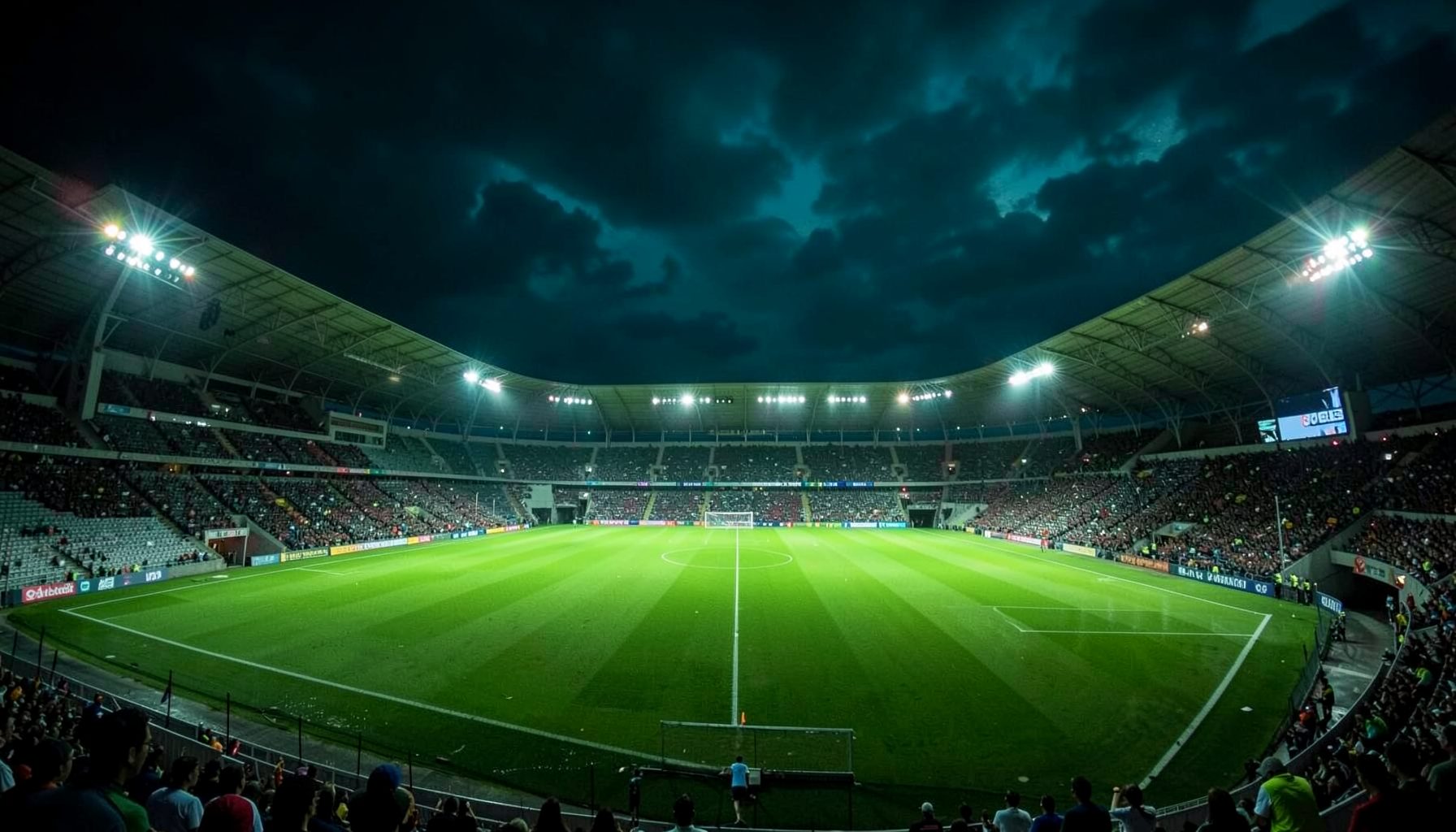
The setting matters too. A-League fixtures at Suncorp Stadium, Sydney Football Stadium and AAMI Park place players in large, enclosed arenas where the crowd is close and every routine is visible. Turf, ball pressure and kickoff angle all influence execution, just as they do in European competitions.
Training for repeatable accuracy
Training should build a repeatable strike rather than an occasional spectacular one. Players work from the same distance, mark target zones and adjust launch angle and spin as conditions change. Tracking ball speed and deviation with radar or video turns subjective feedback into useful evidence about consistency.
Many Australian players first learn the game on suburban park pitches, where uneven ground and shared space reward improvisation. Elite training must preserve that adaptability while imposing repeatable mechanics, then test them after sprinting, under pressure and with a tired plant leg.
Choosing the tactical target
A technically excellent delivery can still be tactically wrong. If a team needs a quick chance rather than a curling attempt, a low strike may be better; if the goalkeeper expects pace, adding height or side-spin can exploit that bias. The best kicker chooses the route the defence has not prepared for.
Form and fixture context sharpen those choices. Checking team news, expected line-ups and football news updates can reveal whether opponents defend deep or protect the space behind the wall. For Australian followers accustomed to A-League and major European betting markets, published odds can also hint at how each side is expected to attack.
Watch Mitom TV for live matches, full-HD streams, fixtures, standings, livescores and highlights. Choose a competition, follow the action with live commentary, and see how preparation, physics and pressure combine in every decisive free kick.
Explore the Full Fixture List
Check schedules, standings, and odds for the leagues you follow, all in one place.
View Schedule